
Gynecomastia
Gynecomastia is a condition in which breast tissue in men grows larger than normal. It can develop because of hormonal imbalance, the use of certain medications or genetic factors. Gynecomastia can have a negative effect on both physical appearance and self-confidence. Surgery removes the excess breast tissue to give the chest a flatter, more masculine appearance. Before the operation the patient’s general health and expectations are assessed in detail. Recovery after gynecomastia surgery is generally quick, and patients can return to daily life within a short time.
What Is Gynecomastia?
Gynecomastia is the enlargement of breast tissue in men beyond the normal range. It can arise from hormonal imbalance, genetic predisposition or as a side effect of certain medications. The enlargement is usually symmetrical in both breasts, but it can also be one-sided. Even where there is no physical discomfort, it can affect a man aesthetically and psychologically.
What Causes Gynecomastia?
The most common cause of gynecomastia is a disturbed balance between oestrogen (the female hormone) and testosterone (the male hormone). This imbalance can be present from birth or develop during puberty, with ageing or as a result of certain health problems. Other causes:
- Liver and kidney disease
- Thyroid hormone disorders
- Use of anabolic steroids and certain medications
- Alcohol and substance dependence
- Obesity
OPERATION TIME
2-5 Hours
RECOVERY TIME
5-7 Days
ACCOMMODATION
8 Days
What to Consider Before Gynecomastia Surgery
Blood thinners and supplements should be stopped
Products with a blood-thinning effect, such as aspirin, vitamin E and omega-3, should be discontinued at least 7 days before the procedure.
Smoking and alcohol should be avoided
Nicotine impairs tissue healing and increases the risk of infection and scarring. Alcohol can also slow overall recovery.
Hormone and metabolic tests should be carried out
If a systemic condition is causing the gynecomastia, that underlying cause must first be brought under control.
Realistic expectations should be set
The patient should know what kind of result to expect and communicate clearly with the surgeon.
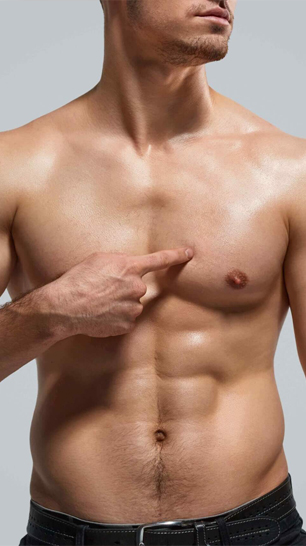
What to Consider After Gynecomastia Surgery
- Rest matters during the first week: This is the critical period in which swelling and pain subside and the sutures must stay in place.
- Compression garment use must not be interrupted: A special medical compression garment is generally worn for 3–6 weeks. It helps the oedema to subside and the new contour to take shape.
- If drains have been used, daily dressing changes and follow-up are essential: Drains are usually removed within a few days.
- weeks later, light exercise such as walking can begin: Activities that put strain on the chest should nevertheless be avoided.
- Strenuous sport, particularly chest exercises, should be postponed for at least 1 month: Where necessary, the surgeon may extend this period.
Although recovery varies from person to person, following the surgeon’s advice in full is very important for the durability of the aesthetic result.
Who Is Gynecomastia Surgery Suitable For?
Gynecomastia surgery is highly beneficial, both aesthetically and psychologically, for men with abnormal breast enlargement. Not every case of gynecomastia requires an operation, but surgery is recommended where the enlargement has become permanent and affects quality of life.
The following are suitable candidates for gynecomastia surgery:
- Those whose post-pubertal gynecomastia has become permanent: Men whose breast enlargement has not receded even though hormonal balance has been restored.
- Men who are unhappy with their body shape and uncomfortable in social settings: Particularly those who avoid wearing a T-shirt, swimming in the sea or going to the gym.
- Those whose breast enlargement persists despite losing weight and reducing body fat: This should not be confused with pseudogynecomastia; where glandular tissue has increased, exercise will not help.
- Those with tenderness, a feeling of fullness or pain caused by the enlargement: Psychological effects can accompany the physical discomfort.
- Those whose general health does not preclude surgery: Men with no cardiac, respiratory, metabolic or hormonal disorder who are physically ready for an operation.
Every patient is assessed after a detailed examination and imaging. Expectations should be shared openly with the surgeon and the decision reached together.
How Long Does Gynecomastia Surgery Take?
The length of the operation depends on the technique used. If liposuction alone is performed the procedure usually takes 45–60 minutes; if liposuction is combined with tissue excision it can take 1.5–2 hours. Same-day discharge is possible, although some patients may need to stay in hospital for 1 night.
Frequently Asked Questions About Gynecomastia (FAQ)
In gynecomastia surgery the incision is usually made around the nipple (along the areola border), so that the scars are hidden in the natural transition line of the skin. In cases treated with liposuction alone, much smaller incisions of 3-4 mm are used, and these fade over time until they are almost invisible. How visible the scars are can vary with skin type and wound care. Scar-reducing creams or silicone-based dressings are recommended during recovery.
Pain, a feeling of tightness and oedema in the chest are normal after surgery, particularly during the first 2–3 days. These symptoms can be brought under control with the painkillers your surgeon recommends. Pain is usually milder after mainly liposuction-based procedures; where glandular tissue has been excised it can be more intense for a few days. The oedema generally subsides within 1–2 weeks, and full recovery is complete within a few weeks.
With the right patient selection and an appropriate surgical technique, the results are generally permanent. Factors such as disturbed hormone levels, significant weight gain and anabolic steroid use can nevertheless cause the breast tissue to grow again. Maintaining healthy habits after surgery and keeping in shape with regular exercise and a balanced diet is therefore recommended.
If the enlargement is due to fat tissue alone, regular exercise and diet can bring partial improvement. Where glandular tissue (the firm breast gland) has increased, however, exercise is not enough. Muscle training can make the chest larger and the appearance more pronounced. The diagnosis should therefore be confirmed after clinical examination and imaging, and surgery planned if necessary.
Recovery varies with the technique used and the lifestyle of the patient. Those in desk jobs can generally return to work within 3–5 days. For work that involves physical activity or active use of the arms, this can extend to 10–14 days. For heavy lifting, intensive sport or exercise, waiting 4 weeks is generally advised.